Remember when Tesla was the future? When electric cars were something you tolerated, but Teslas were something you actually wanted? Back then, Tesla was sleek, disruptive, wildly fast, and just a little bit smug about it.
They weren't just making electric cars. They were building the automotive version of the iPhone. If you drove a Tesla, you weren't just saving the planet. You were ahead of the curve, cooler than the neighbour's Audi, and you knew it.
Now? Not quite the same buzz in the air.
Sales are down. Competitors have caught up. The market's no longer theirs to dominate. And the plan to bounce back? A cheaper car. But will a budget-friendly Tesla be enough to reignite the spark, or is it a desperate move from a company running out of magic?
When Tesla Ruled the Road
Tesla's early years were the stuff of Silicon Valley legend. They launched the Roadster in 2008 - expensive, impractical, and utterly brilliant. A sports car powered by laptop batteries, capable of out dragging a Porsche. It set the tone.
Then came the Model S. A long-range electric saloon that looked good, drove better, and made Mercedes engineers very nervous. It changed what people thought an electric car could be.
The Model X added flair, even if the gullwing doors were more theatre than function. The Model 3 brought mass-market dreams into focus, and the Model Y banked serious sales numbers.
It wasn't just about performance. Tesla's interiors were minimalist to the point of being smug. There were no buttons, just a screen. It felt like the future. Updates came over Wi-Fi. Autopilot was the headline feature. Legacy brands were left scrambling.
They were not just a car company. They were a tech company with wheels.
The Fall from Glory
Fast forward to 2025 and the shine is wearing off. Deliveries are falling. Revenue is down. And for the first time in years, Tesla looks like it's losing ground.
Part of the problem is competition. Where Tesla was once in a class of its own, Chinese EV makers like BYD, Nio, and Xiaomi are now flooding the market with feature packed models at lower prices. Even the old guard: Volkswagen, Ford, BMW - have woken up. Their EVs are good now. Some are even interesting.
Tesla's once cutting-edge interiors now feel sparse. Their tech no longer feels unique. The Model 3 and Y haven't had proper design refreshes in years, and customers are noticing.
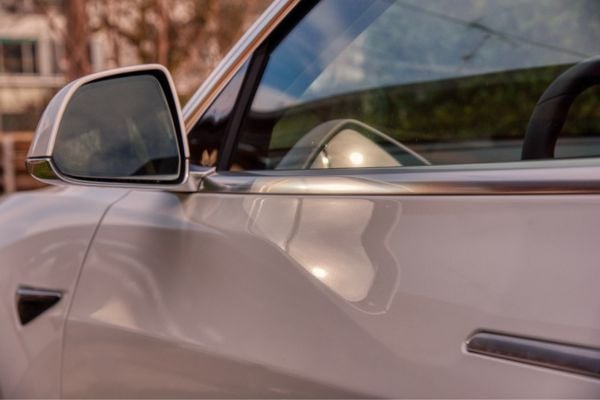
Worse still, build quality complaints just won't go away. Panel gaps, dodgy finishes, glitchy software - things that were once excused as teething issues are now just part of the experience.
People used to buy Teslas because they were exciting. Now they buy them because they're discounted.
Musk: The Brand Within the Brand
Of course, no Tesla story is complete without Elon Musk. Once hailed as a genius visionary, Musk has become something of a liability. His tweets alone are enough to send stock prices on rollercoaster rides.
His relationship with Trump has not helped. They were allies at one point. Now, it's more of a chaotic standoff. Trump recently stripped back EV tax credits and introduced tariffs that hit Tesla where it hurts. Musk, never one to stay silent, responded with jabs of his own and even floated the idea of launching a political party.
Investors don't love it. Neither do some (all) customers. Musk's increasingly erratic public persona has started to eclipse the brand itself.
Tesla needs a clear vision. What it currently has is a man arguing with journalists and politicians on the internet.
Tariffs and the Global Squeeze
As if internal chaos wasn't enough, Tesla's also facing pressure from outside forces. New tariffs have made imported parts more expensive. The company's Shanghai-built models are getting tangled in crossfire between the US and China.
This has driven up production costs and forced Tesla to make awkward decisions about where to build and where to sell. European regulations are tightening too, especially around subsidies and safety tech. In some markets, Tesla just isn't the affordable, tax-friendly choice it once was.
Margins are being squeezed. Pricing is volatile. And international growth, once a key pillar, is under serious strain.
The Budget Car Play
So now, Tesla is going cheaper. Not by building a brand new car, but by cutting costs on what they've already got.
The plan? A basic version of the Model Y. Smaller battery, fewer features, simpler trim. Maybe a cloth interior. Maybe even steel wheels. The kind of car that does the job but doesn't dazzle.
The idea is to bring it in under £30,000. Affordable enough to bring new buyers in, especially as other costs like fuel and insurance rise.
It makes sense in theory. The Model Y is already Tesla's best-seller. Trimming it back could broaden its reach.
But is this really innovation, or just desperation?
Does Cheaper Mean Better?
There's a difference between affordable and appealing. Cutting costs doesn't guarantee demand. Especially not when the product feels like a downgrade.
Tesla's always been a premium brand. Stripping down the Y could dilute that. And if the budget version feels too cheap, or starts racking up quality complaints, it could damage the whole lineup.
Plus, the competition isn't standing still. BYD's Dolphin and Seal models are already well under that price. They're packed with tech, stylish enough, and don't feel like they were built in a hurry. The market has moved on.
Tesla can no longer rely on being the only cool kid on the EV block. The others have arrived, and they brought wireless phone chargers.
What Could Actually Save Tesla?
Tesla doesn't just need to cut prices. It needs to reinvent. Again.
First, it needs a proper entry-level car. A real one. Not a neutered Model Y, but a fresh design for urban buyers. Compact, efficient, stylish, and smartly priced.
Second, it needs to deliver on its autonomy promises. Robotaxis, if they happen, could transform the game. Imagine owning a car that earns you money while you sleep. That would make price less important overnight.
Third, it needs to fix its image. That starts with Musk taking a step back from the spotlight and letting the cars do the talking.
And finally, it needs to improve quality. Reliability, fit and finish, customer service - all the things that make a brand feel solid. Right now, Tesla still feels like it's operating out of a garage with a Wi-Fi router.
Is It Enough?
Short term, yes. A cheaper Model Y might help plug the sales gap. It could get a few new buyers through the door. Maybe even reignite some interest.
But it won't fix the deeper problems. It won't create brand loyalty. It won't silence critics. And it won't restore the sense of wonder Tesla used to inspire.
To really bounce back, Tesla needs to stop chasing the past and start building the future again. That means new ideas, not just cheaper versions of old ones.
If they manage that, they might just pull it off. If not, well - there's always SpaceX.
If you're curious to feel what all the Tesla fuss is about - good or bad - why not try it for yourself?
Our Electric Car Driving Experiences give you the chance to get behind the wheel and see what electric performance really feels like. We do offer Tesla sessions, so you can make up your own mind. (Spoiler alert: it's fast, it's quiet, and it's surprisingly not too bad.)